

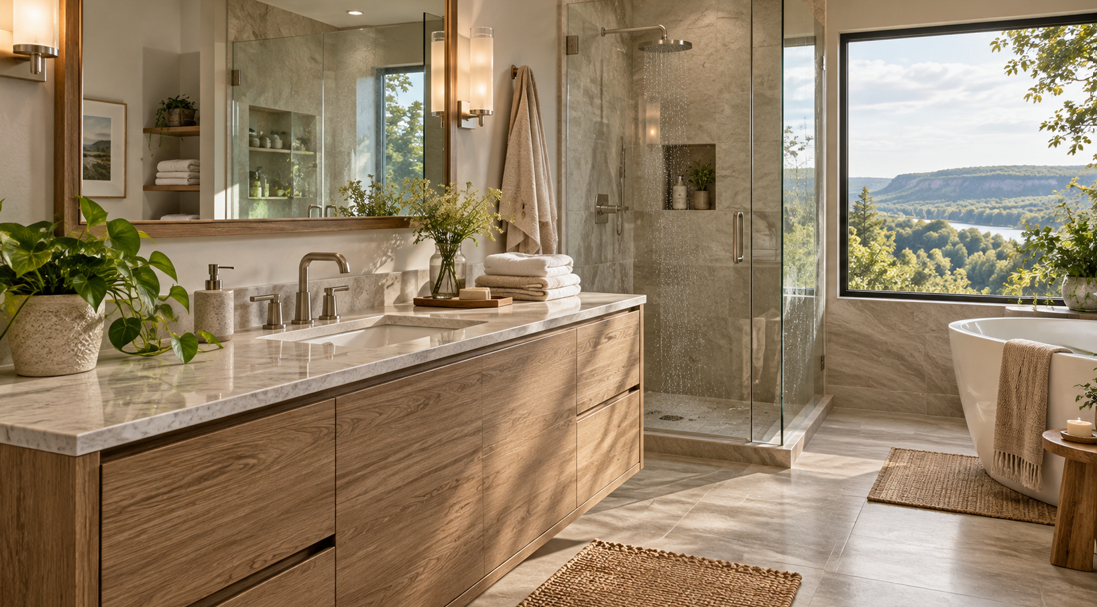
Bathrooms place very different demands on flooring than bedrooms, living rooms or other dry areas of the home. Water splashes from sinks and tubs, damp towels find their way to the floor, humidity rises during showers, and busy family routines can leave moisture sitting longer than anyone intended.
That does not mean homeowners have to give up the warmth and character of wood-look flooring. Today's flooring choices include laminate products designed with improved moisture protection, giving homeowners more options when they want the appearance of wood in spaces where traditional wood flooring may not be the first choice.
For homeowners across Southern Illinois, including Metropolis, Golconda and Harrisburg, the key is understanding that not every laminate product is suitable for every bathroom. Product specifications, installation requirements and the amount of moisture a particular room experiences all matter.
At Home Floor & Kitchens, we have helped homeowners throughout the tri-state region choose flooring for their homes for more than 81 years. If you like the look of laminate and are considering it for a bathroom, here is what to know about moisture-resistant and waterproof options, design choices, installation and everyday care.
Can You Put Laminate Flooring in a Bathroom?
The answer depends on the specific laminate product.
Older laminate flooring developed a reputation for being vulnerable to moisture because water could work its way into seams or reach the core of the plank. Once moisture affected the core, swelling and permanent damage could occur.
Newer laminate products can offer better protection against spills and surface moisture, but homeowners should still pay close attention to manufacturer specifications.
Some products are described as water-resistant, while others are marketed with waterproof performance for specified conditions. Those terms should not automatically be treated as interchangeable.
Before choosing laminate for a bathroom, confirm that the particular product is approved for bathroom or other moisture-prone installations and understand any installation or maintenance requirements that apply.
The important question is not simply, "Is laminate waterproof?"
A better question is, "Is this specific laminate product appropriate for the bathroom where I plan to use it?"
Waterproof and Water-Resistant Are Not Necessarily the Same
When shopping for bathroom flooring, terminology matters.
A water-resistant laminate product may be designed to withstand ordinary spills or surface moisture for a period of time when properly installed and maintained.
A product marketed as waterproof may offer greater protection under the conditions defined by its manufacturer.
However, even flooring promoted for improved water performance is not an excuse to ignore leaks, standing water or installation instructions.
Bathrooms have several potential moisture sources:
Water around the bathtub or shower
Splashes near the sink
Wet feet after bathing
Damp bath mats
Plumbing leaks
Toilet overflows
High humidity
Water tracked from adjoining spaces
A flooring product should therefore be selected as part of a broader moisture-management plan rather than expected to compensate for every possible water problem.
If a plumbing leak occurs, for example, the source of the leak still needs immediate attention regardless of the flooring material.
Why Homeowners Like the Look of Laminate in Bathrooms
One of the biggest reasons homeowners consider laminate for bathrooms is design flexibility.
Wood-look flooring can make a bathroom feel warmer and more residential than some harder-looking surface choices. It can work particularly well in spaces designed around natural colours, soft neutrals and comfortable textures.
Laminate can reproduce a wide range of visuals, including:
Light oak-inspired looks
Medium natural wood tones
Rustic grain patterns
Contemporary wide-plank styles
Deeper brown finishes
Subtle grey or neutral woods
That selection can make it easier to coordinate the bathroom with nearby bedrooms, hallways or other areas of the home.
For homeowners who prefer continuity between spaces, a carefully chosen laminate can help create a more connected overall design.
The best result comes from balancing that visual goal with the practical requirements of the room.
Start With the Bathroom Itself
Not all bathrooms experience the same level of moisture.
A powder room used mainly by guests presents a very different environment from the main family bathroom where several people shower every morning.
Before choosing flooring, consider how the room is used.
Ask yourself:
Is there a bathtub, shower or both?
How many people use the room each day?
Do children use the bathroom?
Is water frequently splashed outside the bathing area?
Is there good ventilation?
Does the room have a history of plumbing leaks?
How quickly are wet floors usually dried?
Will bath mats remain on the floor for long periods?
A lightly used half-bath may offer more flexibility than a high-use family bathroom.
Thinking honestly about everyday conditions is more helpful than choosing flooring according to appearance alone.
Southern Illinois Humidity Makes Moisture Planning Important
Southern Illinois homes experience seasonal weather changes and periods of humidity, making moisture management an important part of home improvement planning.
Indoor bathroom humidity is influenced primarily by bathing and ventilation, but the broader regional climate can also affect how a home feels throughout the year.
Good ventilation matters regardless of the flooring you choose.
An exhaust fan that is appropriately sized and used consistently can help remove humid air after showers and baths. Addressing visible condensation and maintaining proper airflow can also support a healthier bathroom environment overall.
Flooring should be part of that complete approach.
Choosing a bathroom-suitable laminate, following installation requirements and managing humidity responsibly work together much better than relying on any single feature.
Look at the Product's Approved Applications
One of the most important steps in selecting bathroom laminate is checking where the manufacturer says it can be installed.
Do not assume that every plank described as moisture resistant is automatically recommended for full bathrooms.
Product documentation can provide information about:
Approved rooms and applications
Installation method
Required perimeter treatment
Subfloor preparation
Spill-cleanup expectations
Cleaning recommendations
Warranty requirements
Restrictions around wet areas
These details can influence whether a particular flooring product is right for your project.
Homeowners comparing Laminate Flooring should therefore look beyond colour and plank pattern and ask about the requirements of the actual product being considered.
A knowledgeable flooring professional can help you compare design preferences with practical performance needs.
Consider the Difference Between a Powder Room and Full Bathroom
Powder rooms are often easier environments for laminate because they typically do not contain tubs or showers.
There can still be water around the sink or toilet, but the room may experience substantially less daily moisture.
A full bathroom introduces more variables.
Steam from showers, wet feet and splashing around tubs increase the amount of moisture the floor may encounter.
Family bathrooms can be especially demanding.
Children may step out of the bath with water dripping across the room, and busy mornings can mean spills are not wiped up immediately.
That does not automatically rule out an appropriately rated laminate, but it makes product selection and installation more important.
The flooring should fit the real conditions of the space rather than an idealised version of how the bathroom might be used.
Choose a Style That Makes the Bathroom Feel Larger
Flooring design can influence how spacious a bathroom feels.
Lighter wood-look laminate can help create a bright, open impression, particularly when paired with lighter walls, cabinetry or countertops.
Medium tones can add warmth while maintaining a relaxed appearance.
Darker flooring can create dramatic contrast, especially against pale cabinetry or fixtures, but it may visually ground a smaller room more strongly.
Plank direction also influences the finished effect.
Depending on the layout, running planks along the longer dimension of the room can help emphasise length. The relationship between the bathroom and adjoining spaces may also influence the preferred direction.
These are small design decisions, but together they can change the way a compact room feels.
Coordinate Laminate With Bathroom Cabinets
The bathroom vanity is often one of the largest permanent design elements in the room, so flooring and cabinetry should be considered together.
If the vanity has a natural wood finish, avoid assuming the flooring needs to match it exactly.
Slight contrast can create a more intentional appearance.
For example, a deeper vanity may pair well with lighter flooring, while painted cabinetry can provide flexibility across a broad range of wood-look laminate colours.
Pay attention to undertones.
Two surfaces may both be described as brown, beige or grey while having very different warm or cool characteristics.
Viewing samples together can help prevent combinations that seem appropriate online but clash once installed.
Think About the Countertop Too
Bathroom countertops, cabinetry and flooring form a major part of the room's visual palette.
If the countertop includes pronounced veining or pattern, a quieter laminate design can help keep the room balanced.
If the countertop is simple and understated, flooring with a stronger wood grain may add warmth and visual interest.
The aim is not to make every surface identical.
A well-designed bathroom usually benefits from contrast and variation, but the materials should still feel as though they belong together.
Fixtures, wall colour and tile in the shower or backsplash can then complete the design.
Planning these materials together is especially helpful during a larger bathroom renovation.
Matte and Low-Sheen Finishes Can Feel Natural
Bathrooms do not have to rely on shiny surfaces.
A matte or lower-sheen laminate can create a softer appearance and help a wood-look pattern feel natural.
This can work particularly well in bathrooms inspired by spa-like interiors, natural materials or warm contemporary design.
Texture can also add character, depending on the product.
However, visual texture should not be confused with slip resistance. If that characteristic is important for your household, discuss the specific product's performance rather than judging it by appearance alone.
Families with children, older adults or anyone with mobility concerns may want to consider overall bathroom safety alongside style.
Flooring is only one part of that conversation, but it is an important one.
Professional Installation Matters in Moisture-Prone Rooms
Installation is important throughout the home, but bathrooms leave less room for shortcuts.
The subfloor needs to be evaluated, the flooring needs to be installed according to product requirements and transitions or perimeter details must be handled correctly.
Improper installation can undermine the performance of even a well-chosen product.
Bathrooms also contain more obstacles than many other rooms.
Installers may need to work around:
Toilets
Vanities
Doorways
Plumbing penetrations
Tubs or showers
Floor transitions
Irregular wall dimensions
Those details influence both the finished appearance and how the flooring performs.
Professional installation also helps ensure the floor is fitted according to the requirements of the selected laminate system.
Do Not Ignore the Subfloor
The finished floor can only perform as well as the surface beneath it allows.
Before new laminate is installed, the subfloor should be assessed for conditions that could affect the project.
Existing moisture problems deserve particular attention.
If the bathroom has experienced recurring leaks or water damage, those issues should be corrected before new flooring covers the area.
Installing a water-resistant or waterproof-rated product over an unresolved moisture problem is not a long-term solution.
The floor also needs an appropriate surface for installation according to the manufacturer's requirements.
This is another reason professional assessment can be useful before a bathroom project begins.
Keep Water From Sitting on the Floor
Even when laminate is approved for bathroom use, good household habits still matter.
Water should generally be wiped up rather than left standing.
Simple habits can help:
Dry obvious splashes after baths and showers
Address plumbing leaks promptly
Avoid allowing saturated bath mats to remain on the floor
Follow the manufacturer's cleaning instructions
Use bathroom ventilation after bathing
Pay attention to water around the toilet and vanity
These practices are sensible for almost any bathroom floor.
Improved water protection makes a flooring product more practical, but routine care still plays a role in keeping the room looking its best.
Be Careful With Cleaning Methods
More water is not necessarily better when cleaning flooring.
Always follow the cleaning guidance for the specific laminate product.
Harsh products, abrasive tools or excessive moisture may not be appropriate.
Routine maintenance is often simpler than homeowners expect.
Removing dust and debris and addressing everyday spills promptly can help keep the floor looking attractive.
The exact recommended cleaning method varies by manufacturer, so product-specific guidance should take priority over general cleaning advice found online.
This is especially important when maintaining warranty requirements.
Bathroom Flooring Should Fit Your Household
The best flooring decision is one that reflects how your household actually lives.
A couple using a guest bathroom occasionally may have very different priorities from a family with three children sharing one bathroom every morning.
Pet ownership can matter too.
A dog following someone into the bathroom after coming inside on a rainy Southern Illinois day introduces a different kind of everyday moisture and debris.
Consider the complete household rather than selecting flooring purely because a photograph looks appealing.
Questions about durability, moisture protection, cleaning and maintenance are just as important as colour.
The right product should support both the appearance you want and the life happening on top of it.
Compare Bathroom Flooring Options Before Deciding
Laminate may be a strong candidate, but it does not need to be the only material you consider.
Different bathroom flooring options have different strengths, design possibilities and installation requirements.
The advantage of comparing products side by side is that you can decide what matters most for your particular room.
Some homeowners prioritise a convincing wood look. Others place moisture protection at the top of the list. Budget, comfort, maintenance and coordination with neighbouring rooms can all influence the decision.
A flooring specialist can help explain those trade-offs without assuming the same solution is right for every homeowner.
That matters because a powder room in Metropolis may have very different requirements from a heavily used family bathroom in Harrisburg.
Plan for Transitions to Nearby Rooms
Bathroom flooring rarely exists in complete isolation.
The doorway may connect to a hallway, bedroom, dressing area or another floor type.
Think about how the two surfaces will meet.
Colour, height and plank direction can all influence the transition.
If laminate already appears elsewhere in the home, you may want the bathroom to coordinate closely. If surrounding spaces use carpet, tile or another material, a complementary rather than matching approach may work better.
These details are easiest to address before installation begins.
Waiting until the flooring reaches the doorway can limit your options and make the transition feel like an afterthought.
Choose a Bathroom Floor for the Long Term
Design trends can provide inspiration, but bathroom flooring should be chosen with more than the current year in mind.
Think about whether you will still enjoy the wood tone, plank pattern and finish if you change the wall colour, towels or vanity accessories later.
Neutral and natural-looking floors can provide useful flexibility.
That does not mean every homeowner should choose the safest or most conservative design. Personality can still come through in the flooring.
The goal is simply to choose something you genuinely like rather than a surface that only appeals because it is currently popular.
A thoughtful floor can support several future decorating changes without requiring another renovation.
Find the Right Laminate for Your Southern Illinois Bathroom
Wood-look laminate can bring warmth and character to a bathroom, and newer products give homeowners more moisture-conscious options than laminate flooring once offered.
The most important step is choosing the right product for the right space.
Check whether the laminate is approved for bathroom use, understand its water-performance claims, follow installation requirements and think realistically about how much moisture the room experiences.
Professional installation, good ventilation and prompt attention to spills or leaks can all contribute to a better long-term result.
Home Floor & Kitchens has served the tri-state region since 1945, bringing more than 81 years of local experience to flooring, cabinetry, countertops and installation. Our team understands that Southern Illinois homeowners need materials that balance appearance, practical performance and budget rather than one-size-fits-all recommendations.
If you are considering new bathroom flooring in Southern Illinois, visit our showroom or contact us for a free estimate. We can help you compare laminate options and choose a floor that fits both your design plans and the way your bathroom is used.
